Junia Ancaya

I waited a long time to meet Harry. It all began in 2003, one night at three in the morning when I called Australia from Florida. My dad had died the previous year, and I needed to fill that void. I longed to establish contact with someone who knew about the atrocities and the amazing human connections in the penal labor camp for Polish POW’s: Colony # 12 in Komi, west of Siberia, USSR.
“Is this Doctor Harry Perelberg?”
“Yes.”
“Doctor, I’m calling you from America. In 1940-41, your father, a Jew from Warsaw, had saved the life of a Catholic from Lodz—Stefan, my dad,” I said bluntly, galloping over my words. “Starving, swollen, bleeding, and barely able to continue chopping the taiga in subzero temperatures, my dad received stolen food from the Gulag prison camp’s food storage warehouse through the hands of Abraham–called Adas–Perelberg, a cellmate.”
I couldn’t stop talking, “That’s not all. Later, in 1946, your father, risking his life once more, smuggled my mother, brother and me, as well as a Polish general’s three grown children, out of Soviet Communist-ruled Poland to Italy.” “I’ve searched for him all my life to thank him, but couldn’t find him,” I continued. “And now that my dad is dead and knowing your dad had died in 1991, I began searching for you. I needed to talk to you—”
A prolonged silence followed.
“Are you still there, Doctor?” I asked.
“Yes, but tears have filled my eyes. How did you find me?” He said in a hollow voice, his Australian English sounding a little Cockney, musical.
“I’ve learned how to use the computer. Searched the Internet and Jewish genealogy in Australia,” I said.
“My father saved many Jews,” he answered, “but no one has thanked him, and you’re not even Jewish.”
We chatted a while and agreed to meet one day, half way, in the land of our mutual ancestors, Poland.
Three years went by before I met Harry, in June 2006, in the lobby of an elegant Krakow hotel. He had written and said that he would wear a red jacket. An evening jacket, I assumed. Wow! Maybe I wasn’t dressed properly, certainly not in an evening gown, a string of pearls and high heels. I debated what to do during the few minutes I waited for him.

A silvery haired man in a red hiking jacket, blue jeans and sneakers walked through the hotel door. He approached me, resolute, with a smile. “And so we meet, Junia” he said after he hugged me. His features resembled those of Dustin Hoffman. A much better version and more husky, I thought. I estimated him to be around fifty-five.
In the small hotel library, glued to the sofa, we shared family facts in a chopped, nervous manner. The sixty four-years that had passed since destiny had placed our dads together in a prison destined to die . . . and the Pacific Ocean between Harry and me, ceased to exist. Only the overwhelming pain of war losses and deaths dwelled relentlessly somewhere deep inside us. Emotions built in me like floodwaters, uncontained, increasing every moment. I sobbed; he wiped his eyes.
“Tell me more, from the beginning”” Harry said.
“They were fellow inmates, in the same barrack, in Gulag;’s penal camp, Colony #12, with a total of fifteen hundred prisoners,” I said. I have a watercolor of that camp I can give you one day.
“Destiny is so strange,” Harry said after a pause.
“You probably know, Harry, that hundreds of similar death camps abounded all over the Soviet republics. Sentenced to eight years of harsh labor, no one would survive the prisoners’ misery. In fact, 50% to 80% of the jailed men died.”
“I know,” Harry said. “In the course of the existence of the Gulag system, two million Poles died, and a total of twenty million innocent victims of other European countries, including Russians.”
“Our fathers’ camp was building the Trans-Siberian railroad,” I said, remembering my dad’s narration. “Your dad would steal an onion for its vitamin C content, or a piece of sausage, or a chunk of butter from the prison guards’ food storage where he worked. He smuggled all of it in his fufajka, a cotton prison jacket, and secretly gave it to my dad who, after a year of harsh forest labor, was bleeding from his mouth profusely and was reduced to a swollen skeleton, due to malnutrition and overexertion.”
Harry got up and stood in front of me. He grabbed my hand and said,” Tell me more.”
“The prisoners worked twelve hours daily, nine days straight. Had one day to wash and kill lice,” I said. “Their main meal was soup prepared solely with a few leafs of cabbage and rotted fish that the Russian soldiers at the front line wouldn’t eat. It came by boat from Archangelsk on the Dvina River.”
“This is what my dad told me,” I continued. “That if the guards would discover that your dad, Adas, was stealing food to feed a dying inmate, he and my dad would be instantly shot and thrown over the camp’s barbed wire enclosure to rot.”
“He was so brave,” Harry said. “But I didn’t know to what extent.”
“Did you know, Harry, that the Polish minorities, like your dad, were supposed to spy and denounce the Slavic prisoners? That is why they worked indoors and ate better food. Instead, Adas decided to save his countrymen from dying. He later found my dad a job in the camp’s accounting office; it meant being warm and getting regular food. That saved Stefan’s life.”
I got up and we hugged wholeheartedly.

“A few years later, as my father told me, Adas fought as a transport sergeant in the Polish Army during the Italian Campaign,” I said, collapsing back on the sofa. “Both of them took part in three decisive battles: Monte Cassino, Ancona and Bologna. After the war, Adas led a group of us Polish civilians to freedom. Through Czechoslovakia and Austria to Italy.”
“I didn’t know that story,” Harry said. “He was so reserved.”
“Yes, and a fearless hero. To the end. I wish I could hear your dad’s voice once more. I remember his blue eyes, his firm eyebrows and his sober expression, even though so many years have passed since his intrepid act of illegally leading us through several European frontiers.”
Harry pulled out a black-and-white photograph of an attractive young couple standing in a park. Both slim; he, very serious, in a suit; she, darker, in a sweater thrown over her shoulders, leaning lightly against his body.
“These are my parents.” Harry said. “As a businessman, Dad led a quiet life in Australia. They took very good care of us while we were children. Later in life, Roma, my mum, suffered depression. She had been through hell during World War II.” After a pause, he added, “I’ve just spent the last few days visiting the Treblinka Death Camp a few kilometers northeast of Warsaw.” His eyes absently surveyed the room.

“I went to Treblinka by train. The same train line my mum jumped from, in 1942, in MalkiniaStation, a railroad junction” Harry said. “Let me go back in time and explain. Like all other Jews, Mum, then a twenty-four- year-old lady, was forced by the Nazis onto a train from the Warsaw ghetto to be gassed and later burned in the ovens at Treblinka, except . . . she escaped by leaping off the train at night! She hid for two years in Poland’s deep forests. She never told anyone about that prolonged nightmare. I can only guess what could have happened to a young, lone girl in the woods.”
Harry’s expression turned somber. “She survived, but after the Soviets invaded Poland for the second time, in the summer of 1944 (as they chased the Germans westward), my mum had no one to return to. Her entire family and relatives had been murdered by the Nazis, except a sister who had emigrated just before the war.”
We sat, lost in our thoughts.
““So she decided to flee through Lublin and over the Carpathian Mountains, out of Poland. Miraculously, she arrived to Italy. The war ended in May of 1945. Shortly after, my dad met her at a Jewish refugee/ resettlement camp in Milan. They fell in love and married in 1947, in England, during the demobilization of the Polish Army. Later that same year, with a baby in arms, me, they immigrated to Australia to begin a new, normal life far away from Europe. A life of peace.”
For the next two days, in cold and rain, Harry and I walked around Krakow. We visited the Wawel Castle, its cathedral and Kazimierz, a huge prewar Jewish town district reduced by Hitler to a few streets (now being reconstructed and developed). We went to a small synagogue.
Harry casually mentioned, “My wife, Rita, may have a second cousin here in Poland. Somewhere in the mountains, I believe, but I doubt if he is alive or that he can be found.”
With a last name and a town Harry remembered to go by, I was successful in finding Robert, the long lost cousin. He spoke on the phone with great excitement. “Please come and stay with me and my wife,” he urged, after I clarified our unusual connection. “I’ll take you tonight to my church choir practice.”
Church? He was supposed to be Jewish, like Harry and his wife. My intrigue rose during the four-hour ride to the picturesque, mountainous southwestern tip of Poland.
At an agreed upon crossroad, on a forest road, rain drizzling, Julek, my driver friend from Katowice, stopped the car while Harry and I waited with anticipation.
A car drove from the opposite direction, stopped, and a middle-aged man jumped out swiftly on the road and ran toward us. Harry hopped out, and he too leaped with giant steps down the road. Rain pouring, the two men hugged repeatedly shedding tears, without uttering a word—they didn’t speak each other’s language.

At their house, Robert and his wife surrounded us with extraordinary hospitality. We talked non-stop, I, as the proud official translator. Harry, quiet, reserved, amazed. Robert—small, thin, restless and olive-skinned—captivated us with the fire in his voice and his deep black eyes. He told us he was a member of the local Evangelical and historic church, known as Wang Church.
We visited the all-wooden iconic Wang Church, built without any nails, and which had been a pagan temple in ancient Norway. Bought by a Prussian princess during the Partitions of Poland by its three neighbors (Prussia, Austria, and Russia), it had been transported to this Carpathian mountainous area in 1842.
Robert and his wife, Grażyna, sang for us in the church chorale. As we left the service, Robert said, “During the pre-WW II years, my Grandfather Herman, a Polish Jew, married a German lady, Elsa, and lived in central Poland. One of their sons was my dad. The other one was your wife’s father. At the outbreak of war, the Nazis killed Herman and most of his relatives. Grandmother Elsa was imprisoned in Germany for having married a Jew. The boys were left with German relatives, but after the war, as they grew up, they left Germany.”
Robert’s voice became exalted, his lips trembled and his eyes jumped between Harry and me. He blinked repeatedly to shake the tears away and added, “Those were my ancestors. Murdered in the light of day without punishment.”
“But, I believe in miracles,” Robert said. “Herman and Elsa’s daring love wasn’t in vain. Here we are. Alive. Our ancestries not a crime anymore. I’m so happy to have met you, Harry. I feel very close to you. I’m looking forward to meeting your wife, Rita, my cousin—living so far away and yet spiritually so close to us.”
We visited Wang’s gardens and the tiny church graveyard covered by feathery, emerald-green grass. The church was on a hill, and the undulating valley below appeared as beautiful as a postcard. “God bless you, Junia, for bringing us together,” Robert said to me. Harry stayed silent, as if mesmerized, and marveled.
Eventually, Harry and Robert found a common language: Harry spoke Yiddish and Robert knew German. Robert and his wife treated us to home-cooked Polish delicacies and drove us around idyllic mountain towns where they, both architects, had renovated traditional Carpathian wooden chalets. The men hiked up the mountain trails, conversing without stop. Grażyna and I strolled down the curving streets of their pristine town. The mountain air so pure and invigorating.
On the third day, we visited the cemetery where Robert’s father was buried. Harry laid a pebble (a Stone of Remembrance) on the tomb, following the Jewish tradition of showing respect for the departed. But the tombstone also had a glass crucifix embedded in it . . .
I distinctly remember that day at the cemetery. A thin, soft rain daintily left the clouded sky and blessed our presence and our wandering next to the souls of the deceased. A rare, instant bond overcame me with the people whom I had met only a few days before. A bond only the memory of extreme war circumstances can engender. A bond that made us one solid human block—even though we lived in three different continents, belonged to different cultures and carried different lives.
The affection and respect that I was witnessing between Robert, a Christian, half German, half Jew, and Harry, an Australian Jew—both bearing the specters of past massacres inflicted to their loved ones due to bigotry, I realized that human goodness and unity had triumphed over Hitler’s and Stalin’s horrendous racist crimes in Europe.
For me, Harry’s presence and warmth personified all that his extraordinary father, Mr. Adas Perelberg, had meant to my family..
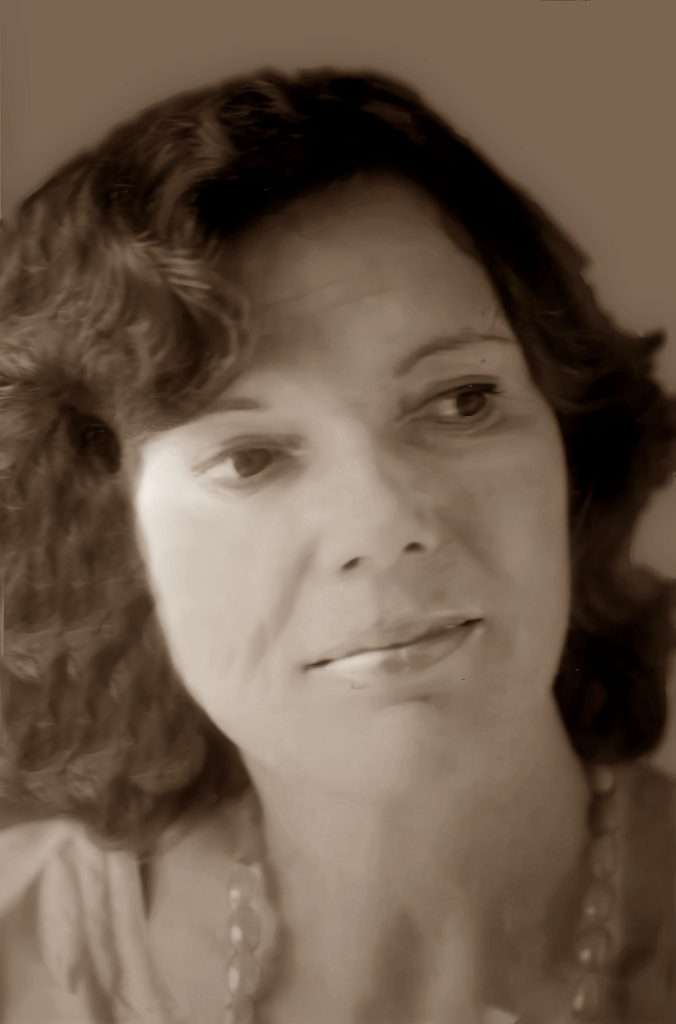
Junia Ancaya was born in Poland. Her family was torn apart by the simultaneous invasion of the Nazis and the Russians in 1939. Her father’s military unit was forced to surrender to the Russians, and he became a forced laborer for several years. He came very close to dying several times. Eventually he was reunited with his family, and they emigrated to Argentina. Junia became a physician and emigrated to the United States.
She has written two books about her own and her family’s experiences during and after World War II, Struggle for Freedom: Marta’s Courage: A Memoir and Stefan’s Journey on the Road of Sorrows.

Leave a Reply